Aged Care Worker Tax Return Guide: Deductions You Shouldn’t Miss in 2024
At Bookbrite Accounting & Taxation Advisers, we understand that sorting through receipts after long shifts isn't your idea of a good time. That’s why we’ve created this helpful guide to ensure you claim every deduction you’re entitled to and maximise your refund.
Step 1: Gather Your Income Statement
If you're employed in aged care, your employer is required to submit your income statement (formerly known as a PAYG summary or group certificate) directly to the ATO. You won’t need a physical copy—we’ll be able to access it through the ATO portal when we lodge your return.
Step 2: Know What You Can Claim
If you’ve spent money during the year that directly relates to your job—and it wasn’t reimbursed by your employer—you may be eligible to claim it as a tax deduction. But remember: keep receipts or proof of purchase for all claims.
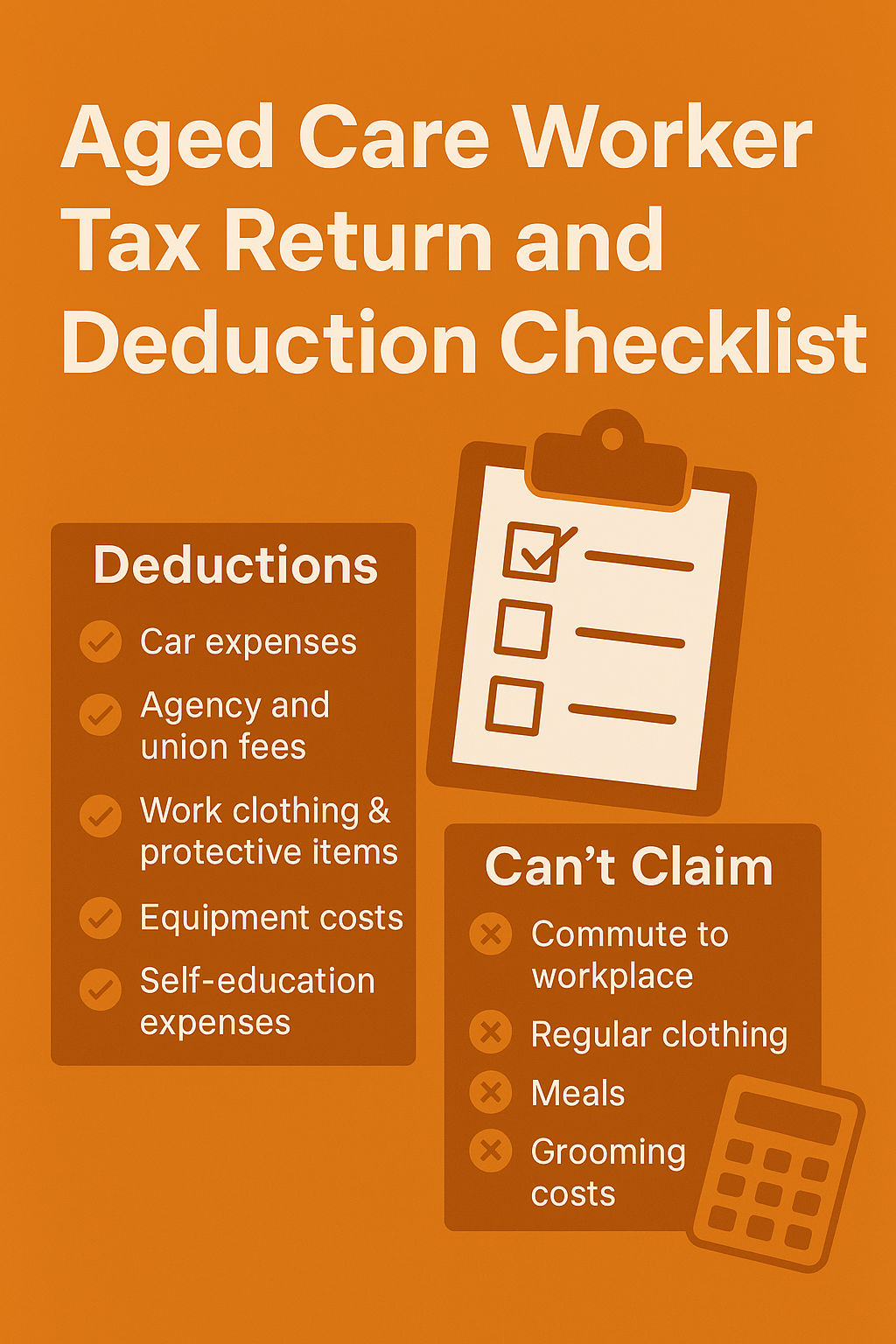
✅ Common Tax Deductions for Aged Care Workers
Here’s what you can claim:
- Travel Between Job Sites: Car expenses, tolls, and parking fees if you're moving between work locations in one day.
- Agency & Union Fees: Payments made to aged care staffing agencies or unions.
- Uniform & Protective Clothing: Branded uniforms or PPE like gloves, aprons, masks, and sun protection gear.
- Work Equipment: Items like stethoscopes, bags for patient files, tablets/laptops (claimable via depreciation if over $300), or other professional tools.
- Training & Upskilling: Courses directly related to your current role (e.g., Certificate in Ageing Support).
- First Aid Certification: If you're the designated first-aid officer, training costs are deductible.
- Phone & Internet Use: A percentage of your personal device bills if used for work communication.
- Professional Subscriptions: Industry journals or membership fees for aged care publications.
Step 3: Know What You Can’t Claim
Some expenses may seem job-related but don’t qualify under ATO rules. These include:
- Travel between home and your workplace
- General clothing (even if used for work only)
- Everyday meals and snacks
- Personal grooming costs
- Nursing agency fees already paid by your employer
Step 4: Keep Records the Right Way
Good documentation is the key to a smooth tax return—and a better refund. You don’t need to keep paper receipts; digital records (photos, scanned copies, or email receipts) are acceptable if they clearly show:
- Supplier’s name
- Date of purchase
- Item description
- Amount paid
💡 Pro Tip: You can skip receipts for purchases under $10, as long as the total of those claims doesn’t exceed $200.
Ready to Maximise Your Refund?
Tax time doesn’t have to be stressful. With a trusted accountant by your side, you can claim confidently and ensure you get back every dollar you deserve.
At Bookbrite Accounting & Taxation Advisers, we specialise in returns for aged care professionals. Whether you're a nurse, home support worker, or community carer, we’ll help you claim it all.
Book your tax consultation today.